Guide
What cleaning solution can you use in a robot mop?
Published
Note: This page contains affiliate links. If you buy through them we may earn a commission at no extra cost to you. Learn more
In short
Use the maker's own floor solution, or plain water, unless your manual names something else. Most makers warn against bleach, disinfectants, strong acids, oils and ordinary foaming floor cleaners, because they can damage seals, pumps and sensors or leave foam in the dock. Some listings go further: the Eufy C28 Omni listing advises avoiding third-party solutions altogether, as they may damage the device.
Products for this job
Compare all 7 productsDreame L40 Ultra Gen2: 25,000 Pa and an extending mop
Check price on AmazonAffiliate linkEcovacs T80S Omni: self-washing roller mop, 24,800 Pa
Check price on AmazonAffiliate linkEufy Omni S1 Pro: 10-in-1 station and roller mop
Check price on AmazonAffiliate link
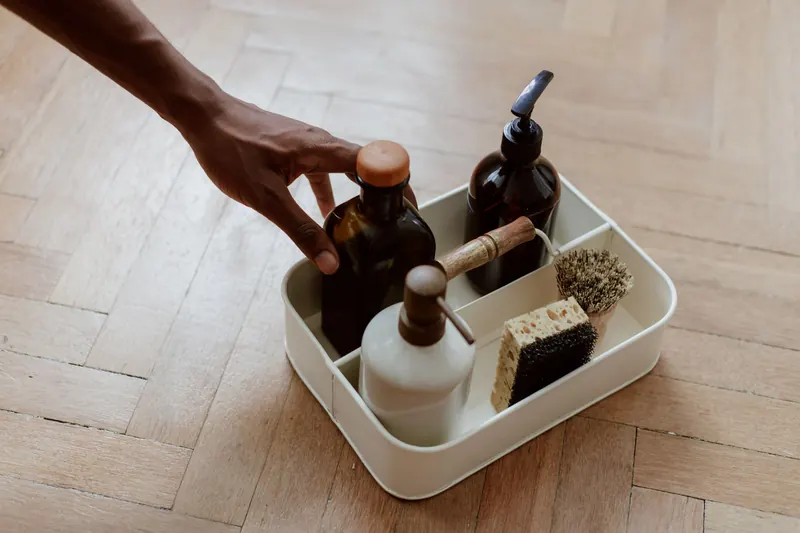
It is tempting to pour your usual floor cleaner into a robot mop's tank. Before you do, check the manual. Robot mops pump water through narrow pipes and nozzles, and docks recirculate it through wash trays and dirty-water tanks. The wrong product can foam, clog or corrode those parts, and on many models using an unapproved liquid may affect the warranty. This guide covers what makers supply, why they rule out common cleaners, and how automatic dosing tanks work.
Maker solutions and what comes in the box
Most brands sell their own floor cleaning solution formulated for their robots, and several include a starter bottle. Going by the Amazon UK listings:
- Shark Matrix Plus models include a starter bottle of Shark's VACMOP cleaning solution.
- Shark PowerDetect models with the NeverTouch Pro base include a starter bottle of multi-surface cleaner.
- Eufy Omni S1 Pro includes a hard floor cleaner, and its station dispenses detergent automatically.
- Dreame docks on models such as the L40 Ultra Gen2 and L50 Ultra add cleaning solution automatically, and the X60 Max Ultra listing mentions a dual solution compartment.
- Ecovacs models such as the Deebot T50 Pro Omni auto-dispense cleaning solution.
- iRobot Roomba Max 705 Combo lists auto-solution dispensing in its AutoWash Dock.
Why makers say no bleach or foaming floor cleaner
Manuals vary, but the reasons given tend to fall into a few groups. This is general guidance; your manual is the final word for your model.
Foam. Ordinary floor cleaners are often made to foam. In a robot, foam can build up in the dirty-water tank and wash tray, trip the water-level sensors or spill out of the dock. Maker solutions are generally formulated to be low-foaming.
Seals, pumps and pipes. Bleach, strong acids, solvents and some disinfectants can attack rubber seals, plastic tanks and small pumps over time. Oils, waxes and polishes can coat sensors and clog nozzles.
Residue and floors. Too much cleaner leaves a sticky or streaky film, and some products are not suitable for sealed wood or stone. Maker solutions are diluted by the dock or by a measured dose.
Warranty. On many models, the manual says damage from unapproved liquids is not covered. Check the warranty terms before experimenting.
Note:Never mix bleach with other cleaning products, and never add bleach or disinfectant to a robot's tank unless the manual specifically says you can. Unplug the dock before cleaning or emptying tanks, and keep liquid away from the charging contacts.
How auto-dosing tanks work
Many all-in-one docks have a small separate tank or cartridge for cleaning solution. During a run, the dock measures a small amount into the clean water as it refills the robot or washes the mops. You fill the solution tank occasionally and the dock handles the dilution.
Most apps let you switch automatic dosing on or off and sometimes choose the amount. If you use plain water most of the time, turn dosing off so the dock does not report an empty solution tank. Some docks only accept the maker's sealed cartridges, while others have a refillable compartment; the manual says which.
- 1
Find the solution tank or cartridge slot on the dock (often under the lid or beside the water tanks).
- 2
Fill with the maker's solution only, to the marked line, and do not dilute it unless the manual says to.
- 3
Turn on automatic dosing in the app and pick a level if offered.
- 4
Run a short mopping job and check the floor is not sticky or streaky; lower the dose if it is.
Can you use plain water or your own cleaner?
Plain tap water is fine in almost every robot mop and is the safest choice for daily light mopping. In hard water areas, limescale can build up in the dock and on heating parts over time; some manuals give a descaling routine or ask for a particular water type, so follow yours.
Third-party robot mop solutions are widely sold, and some brands accept them while others do not. The Eufy C28 Omni listing, for example, tells owners to avoid third-party cleaning solutions because they may damage the device. If your manual does not allow them, stick to the maker's product. Avoid home mixes such as vinegar unless the maker approves them, because acids can affect seals and some floor finishes.
If your robot stops putting water down after a change of solution, our robot mop not dispensing water article covers the common causes.
Solutions and floor types
Sealed hardwood, engineered wood and laminate need very little water and a gentle cleaner. Use the lowest water-flow setting that works, a light dose of solution, and make sure the mops lift or the robot avoids rugs. Natural stone such as marble can be sensitive to acidic products, so check both the robot manual and the floor fitter's advice.
Tiles and vinyl are the most forgiving. For more on wood, see our best robot mop for hardwood floors guide and the robot mop on hardwood floors article. For a broader shortlist, the Eufy robot vacuums compared guide notes which models have detergent dispensers.
Frequently asked questions
Can I use Dettol or bleach in my robot mop? Not unless your manual specifically allows it. Most makers warn against bleach and strong disinfectants because they can damage seals, pumps and tanks.
What can I use instead of the official solution? Plain water is the safe fallback. Some makers accept certain third-party robot mop solutions; others, such as Eufy for the C28 Omni, advise against them. Check your manual.
Can I put floor cleaner like Flash in a robot mop? Most makers advise against ordinary foaming floor cleaners, as foam can overflow the dock or affect sensors. Use a low-foam solution made for robot mops and approved by your maker.
Do I have to use cleaning solution at all? No. Many owners use plain water for routine runs and add the maker's solution only for kitchens or heavier dirt. Turn off automatic dosing if you do not fill the solution tank.
What you need
- Check price on AmazonAffiliate link
Dreame L40 Ultra Gen2: 25,000 Pa and an extending mop
- Check price on AmazonAffiliate link
Ecovacs T50 Max Pro Omni: 18 mm lift, 45°C drying
- Check price on AmazonAffiliate link
eufy E28 Omni: 20,000 Pa plus a portable deep cleaner
From: Eufy robot vacuums compared: Omni stations and roller mops
- Check price on AmazonAffiliate link
Shark PowerDetect ThermaCharged RV2920XE: heated mop wash
From: Shark robot vacuums compared: PowerDetect, Matrix and Navigator