Guide
Can you use a robot mop on hardwood floors?
Published
Note: This page contains affiliate links. If you buy through them we may earn a commission at no extra cost to you. Learn more
In short
Usually yes for sealed (lacquered) hardwood, engineered wood and laminate, provided you set a low water flow and follow the floor maker's care guidance. Oiled, waxed or unsealed wood is more sensitive to water, so check with the floor maker first and use the lightest damp setting or vacuum only. Robot vacuuming alone is fine on almost all wood floors.
Products for this job
Compare all 7 productsEcovacs T50 Max Pro Omni: 18 mm lift, 45°C drying
Check price on AmazonAffiliate linkEufy Omni S1 Pro: roller mop rinsed with clean water
Check price on AmazonAffiliate linkRoborock Qrevo 5AE: 30 water levels, 10 mm lift
Check price on AmazonAffiliate link
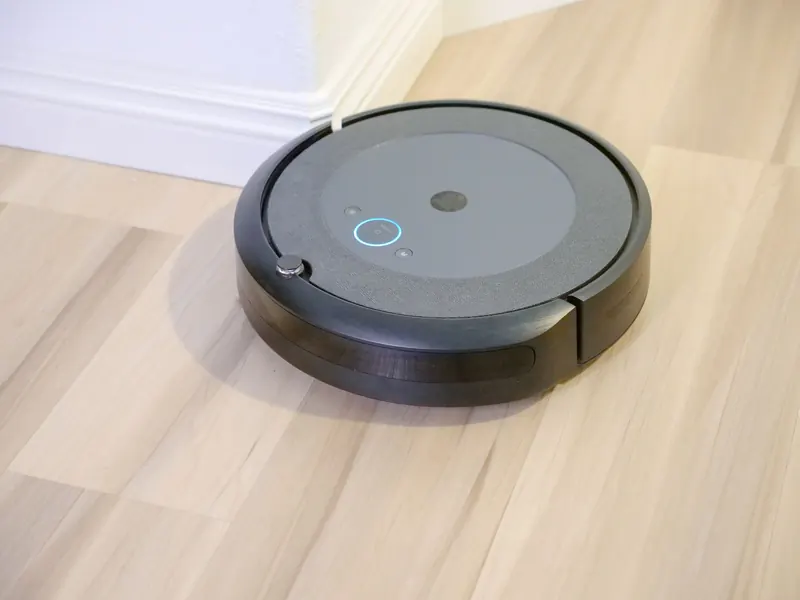
Wood floors are one of the main reasons people buy a robot mop, and also the main reason they hesitate. Water and wood do not mix well, and a robot that leaves puddles or drags a soaking pad could cause swelling, cupping or dull patches. The good news is that modern robots meter water closely and many lift their mops off rugs. This explainer covers which wood finishes cope with a robot mop, which settings matter, and why the floor maker's guidance should have the final say.
Sealed, oiled and waxed wood: why the finish matters
What protects a wood floor from water is its finish. Lacquered or sealed floors have a hard surface layer, so a lightly damp mop wipes the finish rather than the wood. Oiled floors soak oil into the grain; they resist spills reasonably but need regular re-oiling and are more sensitive to repeated wetting and to some cleaning products. Waxed and unsealed floors are the most vulnerable: water can mark the surface or get into the wood.
If you are not sure which you have, the floor fitter or the maker's care sheet is the best source. A common home check is to put a single drop of water in an out-of-the-way spot: if it beads, the finish is sealed; if it soaks in or darkens the wood, treat the floor as oiled or unsealed.
| Floor | Robot vacuum | Robot mop |
|---|---|---|
| Sealed or lacquered solid wood | Yes | Usually fine on low water flow |
| Engineered wood (lacquered) | Yes | Usually fine on low water flow |
| Laminate | Yes | Usually fine on low flow; watch the joints |
| Oiled wood | Yes | Check maker guidance; lightest setting or skip |
| Waxed or unsealed wood | Yes | Generally avoid wet mopping |
Controlled water flow is the key setting
The difference between a robot mop and a bucket is how little water it uses when set up properly. Most app-connected robots let you set water flow, often per room, and some offer fine control: the Roborock Qrevo 5AE listing, for example, mentions 30 water flow levels in the app. Start on the lowest setting on wood and only raise it if the floor is still visibly dirty.
A damp mop should leave a film that dries within a minute or two. If you can see wet streaks lingering, or water collects at the edges or by the skirting boards, turn the flow down. Mop pads that are washed and dried by the dock also help, because a pad left wet between cleans can keep releasing water.
- 1
Confirm the floor finish and read the floor maker's care guidance.
- 2
Set the lowest water flow for wooden rooms in the app.
- 3
Use only the cleaning solution the robot maker approves, diluted as directed.
- 4
Watch the first clean and check that the floor dries quickly behind the robot.
- 5
Adjust per room: more water for a tiled kitchen, less for the wooden living room.
Mop types and mop lifting
Robots mop in three main ways. Pad mops drag or vibrate a flat cloth. Rotating mops spin two round pads and press them onto the floor. Roller mops turn a cylinder that is rinsed continuously in the robot. All can work on sealed wood; the bigger factors are water flow and how well the pads are cleaned and dried.
Mop lifting matters if you have rugs on a wooden floor. The robot raises its mops when it senses carpet so rugs stay dry, and it also stops a wet pad pressing on the same spot. Stated lift heights vary: the Qrevo 5AE listing gives 10 mm, the Dreame L50 Ultra listing 10.5 mm and the Ecovacs Deebot T50 Max Pro Omni listing 18 mm. Some robots can also detach their mops at the dock for vacuum-only runs.
Cleaning solutions and wood
Use only the solution the robot maker approves for the dock or tank, at the stated dilution. Many wood floor makers also specify a pH-neutral cleaner and warn against harsh or oily products that can leave residue or soften the finish. If the robot maker's and floor maker's advice conflict, plain water on a low setting is the cautious choice.
Never put floor oils, polishes or wax products in a robot tank: they can block the water system and leave a sticky film. Our guide to robot mop cleaning solution explains what is safe to use.
Note:Some docks wash mops with hot water. Let the dock finish its cycle before handling the mop pads, and keep children away from the dock trays while it is washing or drying.
Practical tips for wooden floors
Vacuum before mopping, so grit is lifted rather than dragged across the finish; most all-in-one robots do this automatically. Keep the robot's wheels clean, as trapped grit can mark softer finishes. Set no-mop zones near door thresholds where gaps between boards are larger, and around oiled areas such as a hallway where you prefer to clean by hand.
If you mainly have wood and want a robot for it, our guide to the best robot mop for hardwood floors focuses on water control and mop lifting, and our vacuum and mop guide covers mixed floors. For a wider view, see robot mop vs traditional mop.
- Lowest water flow on wood rooms.
- No-mop zones for oiled or waxed areas.
- Mop lifting or detaching for rugs.
- Approved cleaning solution only, or plain water.
Frequently asked questions
Are robot mops safe for hardwood floors? On sealed hardwood, generally yes, with a low water setting and the floor maker's approval. On oiled, waxed or unsealed wood, check the floor maker's guidance first and consider vacuuming only.
Can you use a robot vacuum on hardwood floors? Yes. Vacuuming is gentle on wood and is the main job a robot does on hard floors. Keep the wheels and brushes clean so grit is not dragged across the surface.
Will a robot mop damage laminate? Laminate copes with a lightly damp mop, but standing water at the joints can cause swelling. Use a low flow and check the laminate maker's care advice.
Should I use the maximum water setting on a dirty wood floor? No. Run a second pass on a low setting instead, or spot clean a stubborn mark by hand.
What you need
- Check price on AmazonAffiliate link
Ecovacs T50 Max Pro Omni: 18 mm lift, 45°C drying
- Check price on AmazonAffiliate link
Dreame L40 Ultra Gen2: 25,000 Pa and an extending mop
- Check price on AmazonAffiliate link
Xiaomi H40: compact 32.6 cm self-empty base